
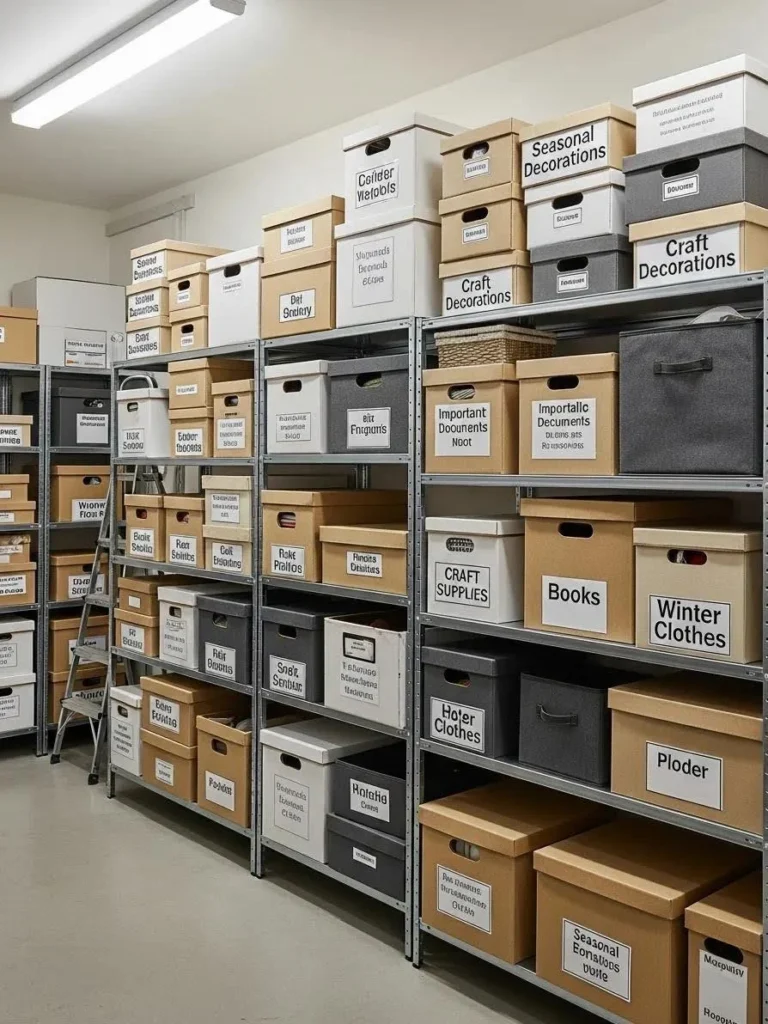
Clear and precise labelling is absolutely essential for maintaining an organised storage system and ensuring faster, more efficient retrieval of items. Today, this article provides a comprehensive overview of practical and effective methods for labelling storage boxes.
It covers the main types of labels available, the tools that help create durable and legible labels, and the significant advantages of implementing colour‑coding, numbering systems, and digital integration. Whether you are a homeowner looking to declutter or a business aiming to improve inventory control, this guide offers valuable insights to enhance your storage management.
What Are the Essential Label Types and Tools for Storage Boxes?
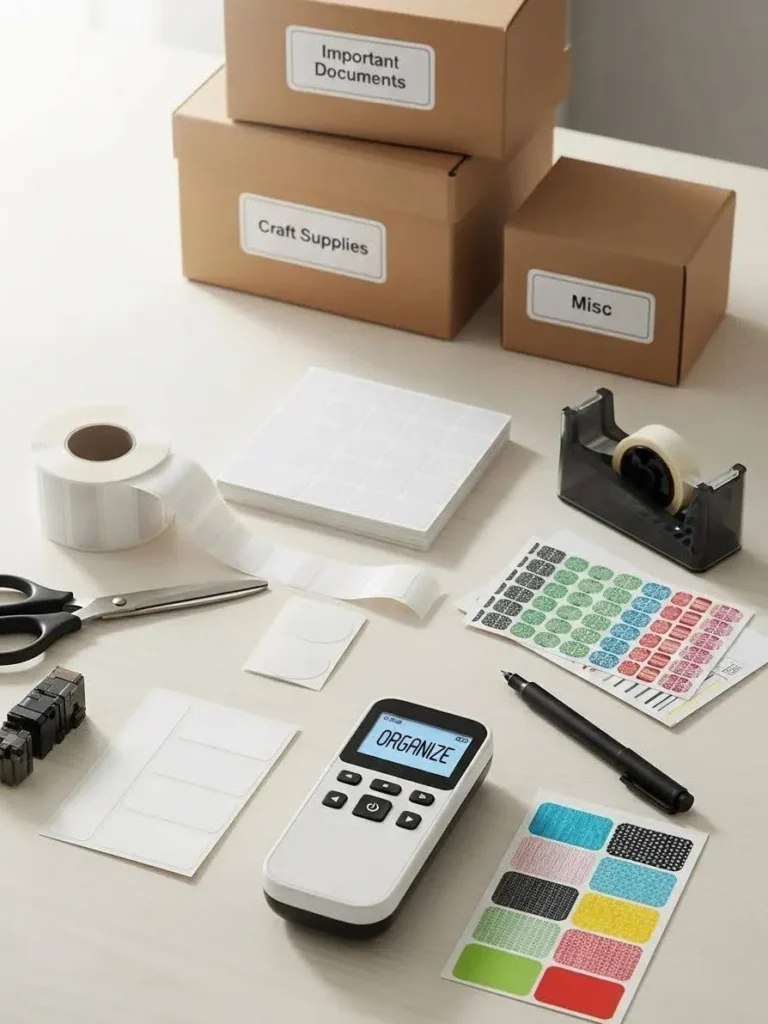
Labels serve as the key to quick and accurate identification of box contents, significantly reducing the time spent searching.
The most common label types, adhesive, printable, and archive labels, each cater to different needs: from rapid marking to professional labelling with barcodes or QR codes, and durable identification suited for long‑term storage. Selecting the appropriate label type tailored to your specific context greatly enhances organisation and retrieval efficiency.
Different Label Types and Their Benefits
Adhesive labels are designed for quick application and easy handwriting, making them ideal for spontaneous or temporary use. Printable labels provide a polished, professional appearance and can incorporate barcodes or QR codes, facilitating advanced tracking and inventory management.
Archive labels are built to withstand the test of time, offering durability and clear identification for items stored over extended periods. Employing the right label type in the right situation ensures that boxes remain consistently and clearly identifiable, streamlining your storage system.
| Label Type | Purpose | Benefits |
|---|---|---|
| Adhesive Labels | Quick identification | Easy to apply, customizable |
| Printable Labels | Professional appearance | Can include barcodes, durable |
| Archive Labels | Long-term storage | Clear identification, durable |
MIGHTY Self Storage offers secure, flexible storage solutions that support organised, clearly labelled items, helping you maintain order and accessibility.
Tools for Creating Durable and Accurate Labels
Label‑makers are invaluable for producing consistent, high‑quality labels quickly and efficiently. Permanent markers and pens remain useful for handwritten notes, especially when flexibility is needed. Printable label sheets allow for custom-designed labels that can include additional data such as barcodes or QR codes.
In environments that pose challenges like moisture or temperature fluctuations, selecting waterproof materials, strong adhesives, and laminated finishes ensures that labels remain legible and intact over time, preserving the integrity of your storage system.
How Can Colour Coding and Numbering Systems Optimise Storage Unit Labelling?
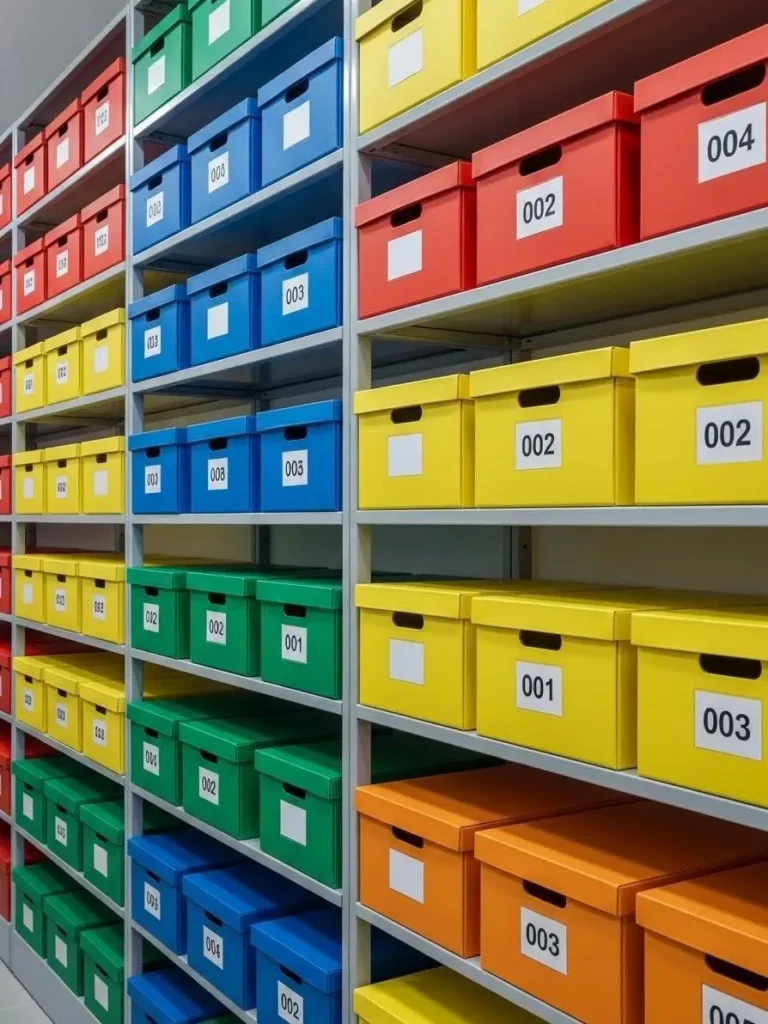
Colour‑coding and numbering are straightforward yet highly effective strategies that significantly accelerate retrieval times and enhance inventory control by providing clear visual and numerical references.
Benefits of Colour Coding
Colour‑coding offers an immediate and intuitive visual cue: by assigning specific colours to categories (for example, blue for office supplies, red for seasonal items), users can quickly locate groups of boxes without needing to read each individual label. This method not only reduces search time but also facilitates rapid visual inventory checks, making it easier to assess stock levels at a glance.
How Numbering Helps Inventory Tracking
Numbering assigns a unique identifier to each box, which can be linked directly to detailed inventory records. This system enables swift cross‑referencing, simplifies audit processes, and provides clear tracking of items as they move into or out of storage, thereby improving overall inventory accuracy and accountability.
What Digital Inventory Management Solutions Complement Physical Labelling?
Digital inventory management tools serve as a powerful extension to physical labelling by enabling scanning, searching, and comprehensive reporting capabilities. When combined, these systems minimize human error and provide faster, auditable tracking of stored items, greatly enhancing operational efficiency.
Integration of Digital Tools with Labelling
Inventory software integrates seamlessly with barcodes or QR codes printed on labels, allowing real‑time recording of updates. Scanning a code instantly reveals detailed information about box contents, location, and movement history, significantly reducing manual data entry and improving accuracy across the inventory management process.
Advantages of Inventory Software
Inventory software automates the process of updating records, generates detailed reports, and highlights patterns in storage usage. These insights empower users to optimise space allocation, prioritise retrievals efficiently, and support strategic storage planning, ultimately leading to a more streamlined and effective inventory system.
What Practical Labelling Tips Enhance Storage Box Organisation for Individuals and Businesses?
Practical labelling techniques ensure that items remain easily identifiable and accessible, saving valuable time and reducing frustration. Adopting simple, consistent approaches benefits both homeowners and business staff by creating a reliable and user-friendly storage environment.
Labelling Tips for Homeowners
Homeowners should label boxes with clear, specific descriptions that accurately reflect the contents. Using large fonts and high-contrast colours improves visibility, while including an itemised list on the label can provide additional clarity. It is important to avoid vague terms such as “Miscellaneous,” which can lead to wasted time during searches and confusion.
Labelling Strategies for Businesses
Businesses gain from implementing standardised label formats, ensuring consistent placement on boxes, and conducting regular updates to maintain accuracy. Colour‑coding by department or product type, combined with scheduled label reviews, helps sustain an organised system that speeds up retrieval and reduces errors.
MIGHTY Self Storage: Supporting Your Storage Labelling Needs
MIGHTY Self Storage is dedicated to providing secure, flexible, and accessible storage solutions tailored to both individuals and businesses. Understanding the importance of effective labelling, MIGHTY Self Storage offers a range of services and resources to help you maintain an organised storage environment.
Our facility is designed to accommodate various storage needs. It uses 24/7 internal CCTV and individually alarmed rooms to help protect stored items. We also provide packing materials and labels to help you organise boxes clearly. MIGHTY Self Storage can help you store labelled items securely and make them easier to access.
Frequently Asked Questions
What are the best practices for creating labels for storage boxes?
Use clear, concise text with large, legible fonts and contrasting colours to ensure readability. Include specific details such as category or item descriptions, and select durable, waterproof materials to withstand environmental factors. Always update labels promptly when contents change to maintain accuracy.
How can I ensure my labels remain intact over time?
Choose high‑quality materials that resist moisture and heat, use adhesives suited to the storage environment, and consider laminating labels for added protection. Regularly inspect labels for signs of fading or peeling and replace them as needed to preserve legibility.
What role does labelling play in inventory audits?
Labels facilitate faster and more accurate counting and verification by linking physical items directly to inventory records. This connection reduces discrepancies and streamlines audit workflows, making the process more efficient and reliable.
Can I use digital labels alongside physical labels?
Absolutely. Incorporating QR codes or barcodes on physical labels allows for quick scanning to access detailed item data and update inventories in real time, effectively combining the strengths of both physical and digital systems.
How often should I review and update my storage labels?
It is advisable to review labels at least once a year and update them whenever there are significant changes in inventory or when items are relocated. This practice helps keep records accurate and the storage system well organised.
What are some common mistakes to avoid when labelling storage boxes?
Avoid using vague descriptions, inconsistent label formats, and low‑quality materials that can deteriorate quickly. Regular updates and standardisation are key to preventing errors and maintaining a reliable labelling system.