
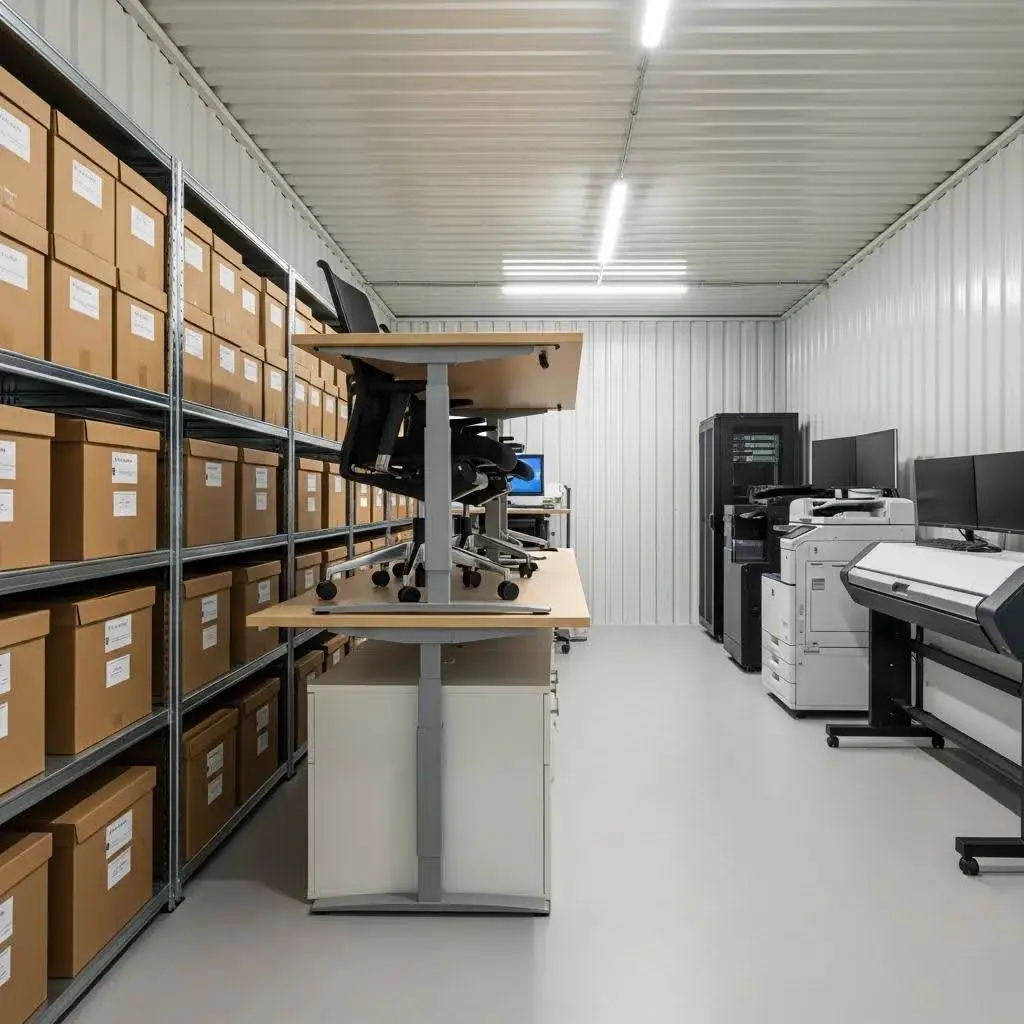
Think of a business storage unit as a secure, off-site extension of your workplace, a place to free up desks, protect stock, and archive records while keeping them easy to reach.
In this guide, we walk you through what businesses commonly store in commercial self-storage, how to pack and protect items, which goods are unsuitable or prohibited, and how units help e-commerce sellers and tradespeople.
You’ll get practical tips on packing, shelving, choosing unit sizes, document compliance, and using storage for fulfilment. The guide covers business storage unit items, document storage Leicester, and e-commerce inventory storage Leicester to help you compare options for your company.
What Items Are Commonly Stored in Business Storage Units?
Businesses typically use storage units for boxed records, palletised inventory, seasonal displays, spare furniture, and trade tools, items that are non-perishable, easy to organise, and benefit from secure off-site space.
Moving these goods out of the office reduces clutter, supports business continuity, and gives you flexible, insured access when you need it. Below are the main categories businesses store in self-storage and why each is a good fit.
- Documents and archives: boxed, labelled, and easy to retrieve for compliance.
- Packaged inventory: palletised or shelved for efficient picking and dispatch.
- Office furniture: disassembled or wrapped to protect surfaces during storage.
- Seasonal stock and displays: stored between busy periods to free retail space.
- Tools and trade equipment: kept on racks or in lockable chests for safe staging.
This quick list helps you plan packing, shelving, and the right unit size for each category. The table below links typical business items to practical packing methods and suggested unit sizes to speed decision-making.
| Item Type | Typical Packaging / Preparation | Suggested Unit Size |
|---|---|---|
| Documents & Archives | Archive‑standard boxes and labelled shelving | 10–25 sq ft |
| Packaged Inventory | Pallets or shelving, shrink‑wrapped boxes | 25–75 sq ft |
| Office Furniture | Disassembled items with covers and padding | 50–100 sq ft |
| Tools & Equipment | Lockable tool chests or anchored machinery | 13–50 sq ft |
Secure Storage for Business Documents and Archives
Store records in archive-standard boxes, label each box clearly, and maintain a retrieval index so audits and legal requests are fast and painless. Use shelving to keep boxes off the floor, group by department or project for quicker access, and record retention dates to manage disposal.
Choosing a facility with individually alarmed units, 24/7 internal CCTV, and insurance included gives extra protection for archival material and makes off-site storage a practical compliance tool.
Clear labelling and an organised retention plan cut search time and help you meet GDPR and other legal obligations without scrambling for files.
Inventory and Stock Suitable for Storage
Non‑perishable, boxed inventory is ideal for self‑storage; it tolerates ambient conditions and stacks well on shelving or pallets. E‑traders and retailers commonly store slow‑moving SKUs, bulk seasonals, and returns, arranging units for pick‑and‑pack operations with shelves optimised by access frequency.
Create simple picking zones by placing fast‑moving items near the entrance and using labelled bins for SKUs. Regular cycle counts and a digital inventory log reduce shrinkage and support insurance valuations, while smart shelving speeds fulfilment.
With these measures, a storage unit becomes a cost‑effective operational space for staging and order fulfilment without the expense of a dedicated warehouse.
What Office Equipment and Furniture Can Be Stored Safely?
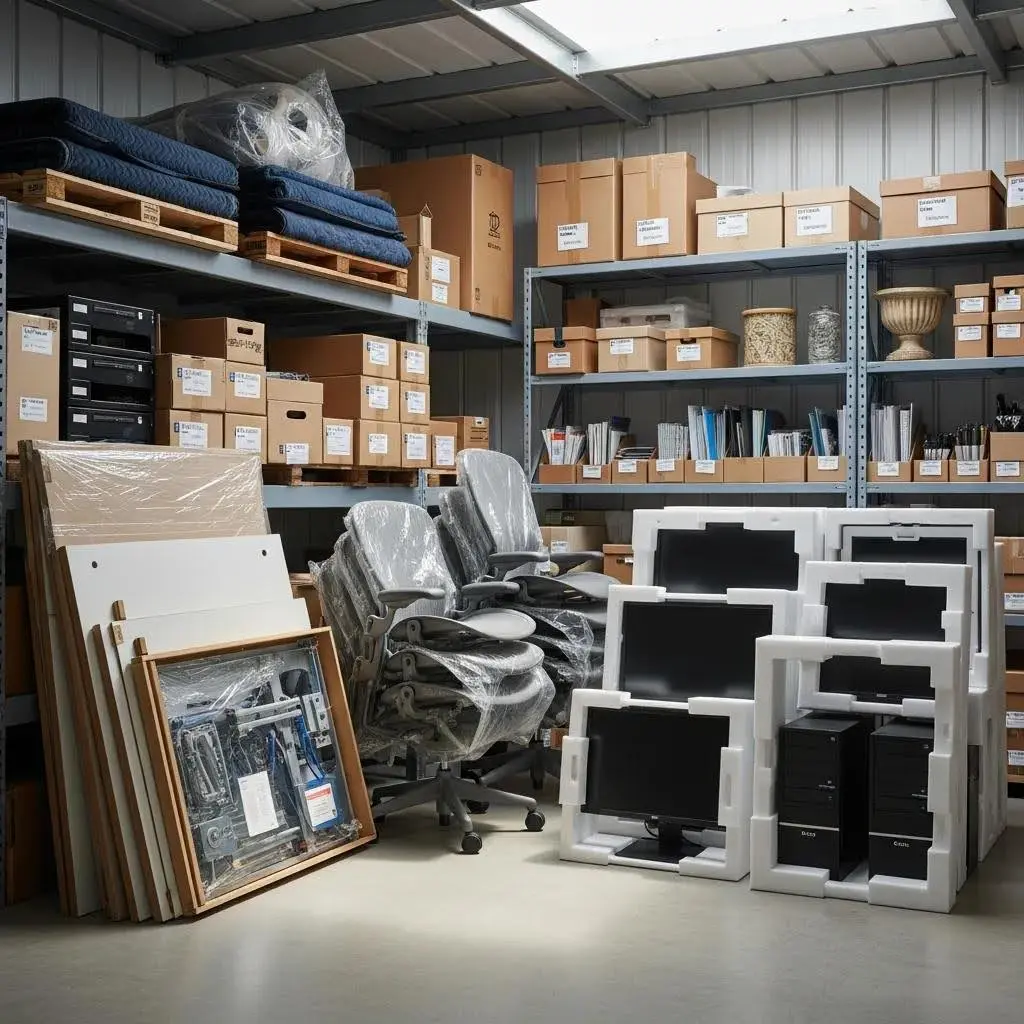
Most office furniture and common equipment, desks, chairs, filing cabinets, boxed monitors, printers, and peripherals, store well when prepared correctly. Use bubble wrap, furniture covers, and pallets to prevent moisture and surface damage.
Sensitive electronics can be stored if powered down, placed in anti-static packaging, and kept in a unit with temperature and humidity monitoring; for mission-critical servers, consider climate-controlled options. Off-site storage is a practical way to protect assets during refurbishments, relocations, or seasonal downsizing.
| Item | Storage Tip | Value / Benefit |
|---|---|---|
| Desks & Tables | Disassemble legs, wrap surfaces, and store upright on pallets | Maximises space and prevents surface damage |
| Chairs | Remove casters and nest or stack where possible | Reduces footprint and protects upholstery |
| Printers & Peripherals | Keep in original boxes or use anti‑static wrap; store manuals together | Makes reinstallation easier and reduces the risk of static damage |
Efficient Storage for Office Furniture and Equipment
Disassemble large items, place all fixings in labelled bags attached to the corresponding item, and photograph parts to speed reassembly. Use protective film, a blanket, or cardboard between stacked surfaces and place heavier items on the bottom.
Keep electronics on shelves or pallets above floor level, leave an aisle for frequently accessed goods, and keep a photographed inventory to support insurance claims and quick returns to service. A clear index sheet acts as your retrieval map and reduces downtime when you need items back in the office.
These straightforward steps protect assets and help you use your unit more efficiently.
Benefits of Storing Office Equipment Off-Site
Off-site storage lowers fixed premises costs, frees up productive floor space, and protects assets during moves or refurbishments. Moving rarely used furniture and seasonal fixtures into storage lets you create flexible, revenue-focused layouts without permanently disposing of useful items.
Storage also scales with your needs; rent a larger or smaller unit as demand changes without long-term property commitments. For Leicester SMEs, this means lower overheads and more agility during growth or change.
That flexibility encourages smarter asset management and keeps on‑site space focused on core business activities.
What Items Are Prohibited or Not Recommended in Business Storage Units?
Some items are barred or strongly discouraged because they pose safety, legal, or hygiene risks, for example, flammable materials, toxic substances, and perishables. These goods can breach facility rules and invalidate insurance.
Providers typically forbid hazardous chemicals, compressed gases, and corrosives because of fire and contamination risks.
Perishable food and living things are banned due to spoilage, pests, and welfare concerns. The list below summarises the main prohibited categories and why they’re restricted.
- Flammable liquids and gases: fire and explosion risk.
- Corrosive or toxic chemicals: structural damage and health hazards.
- Perishable food or live animals/plants: spoilage, pests, and legal issues.
- High‑value items not declared for insurance: coverage complications.
MIGHTY Self Storage enforces a clear prohibited‑items policy to meet safety and insurance obligations; please check facility terms or ask our team before booking to ensure compliant storage.
| Item | Reason Prohibited | Safe Alternative / Action |
|---|---|---|
| Petrol / Solvents | Fire and explosion risk | Dispose of at a hazardous waste centre or licensed facility |
| Compressed Gas Cylinders | Pressure and leakage hazard | Use a specialist depot or vehicle storage service |
| Perishable Food | Spoilage and pest attraction | Use cold‑chain or refrigerated storage providers |
| Live Animals | Welfare and legal concerns | Rehome or use licensed boarding services |
Hazardous Materials Not Allowed in Storage Units
Hazardous materials, for example, flammable liquids, compressed gases, toxic pesticides, and corrosive acids, are normally banned from self‑storage because they create fire, contamination, and health risks that operators and insurers will not accept. Storing regulated substances can invalidate insurance and create liability for both the customer and the facility.
Businesses should arrange certified hazardous waste removal or use licensed hazardous storage facilities. Keep an inventory of any potentially risky items and consult local hazardous‑waste services for safe disposal.
Reasons Perishable Goods and Living Things Are Prohibited
Perishables spoil, create odours, and attract pests that can spread to neighbouring units; living things introduce welfare and legal obligations that storage facilities are not equipped to meet.
Temperature control, animal care, and food‑safety processes fall outside standard self‑storage services, which focus on dry, non‑living goods.
For perishable inventory, contract a specialist cold‑chain or refrigerated logistics provider that manages time‑ and temperature‑sensitive stock. Keeping perishables out of general units protects your goods and prevents infestations or sanitation issues for all customers.
This is why specialist solutions are the better option for perishables than using a standard storage unit.
How Do Business Storage Units Support E‑commerce and Commercial Needs?
Business storage units support e‑commerce by providing flexible inventory space, secure stock holding, and staging areas that cut costs compared with leased warehouses.
They help SMEs manage variable demand, improve pick‑and‑pack workflows, and offer security backed by insurance and facility features like alarmed rooms and CCTV.
Tradespeople can also stage tools and machinery close to job sites, reducing theft and improving logistics. The practical benefits below show how storage integrates into everyday commercial operations.
- Flexible inventory capacity: Scale space up or down as your sales change.
- Cost efficiency: Only pay for the space you use rather than a long lease.
- Security & insurance: Keep stock protected with monitored facilities and cover included or available.
Inventory Storage Solutions for Online Retailers
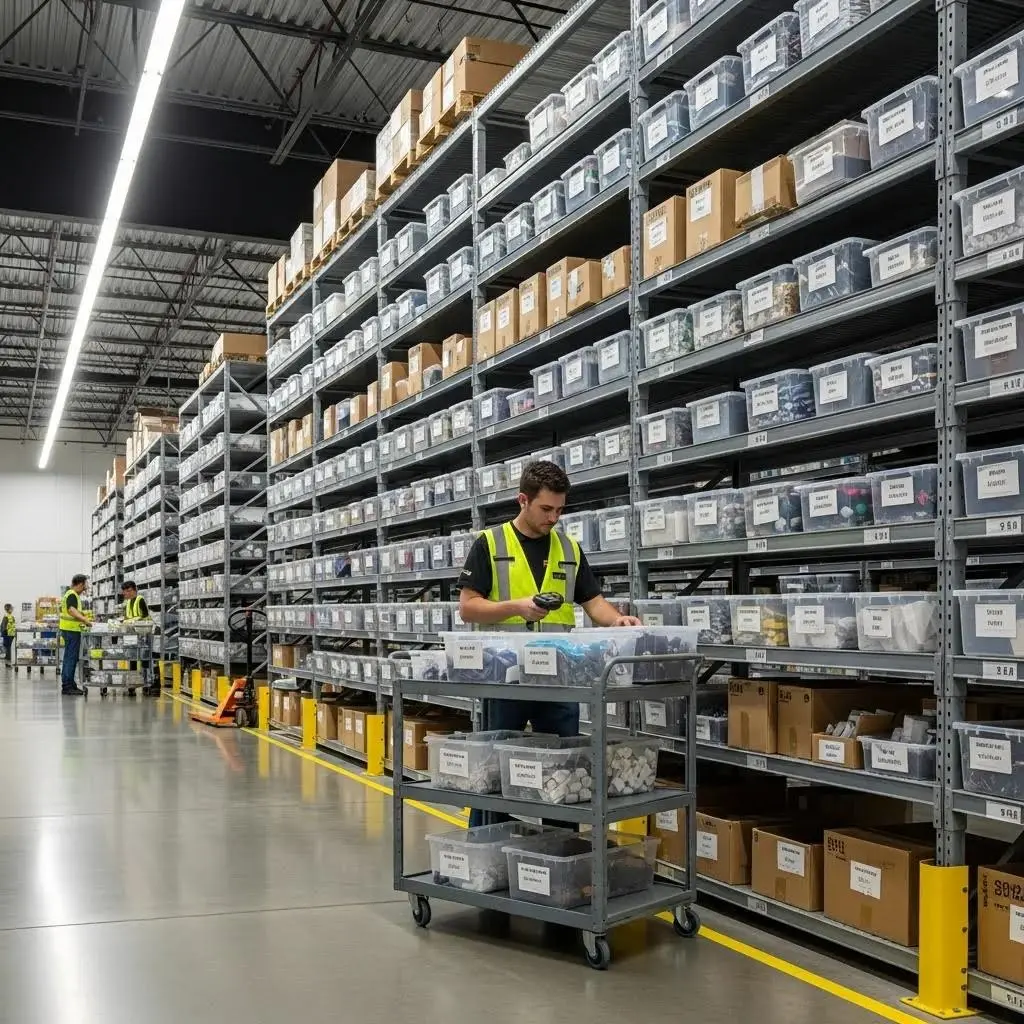
Online sellers benefit from shelving, pallet racking, and labelled bin systems that support fast picking, packing, and dispatch without the cost of a full warehouse.
Small traders can start with shelving for SKU organisation and grow into pallet racking as volume increases. Place high‑velocity SKUs near the entrance, use clear labelling to avoid mistakes, and perform regular cycle counts to keep stock accurate. These steps reduce fulfilment time and support insurance claims when needed.
Used this way, a storage unit acts as a lean, controllable extension of your fulfilment process.
Secure Storage for Tradespeople’s Tools and Machinery
Tradespeople can cut theft and downtime by using lockable tool chests, bolting heavy machinery to pallets or anchor points, and storing handheld tools in lockable cabinets or racks. Keep a photo inventory with serial numbers, rotate frequently used tools to accessible shelves, and place bulky items on ground‑level pallets.
Declaring valuations for high‑value equipment and keeping insurance documentation helps with claims. Combine good locks with facility security features to reduce risk and keep tools ready between jobs.
If you’re ready to secure space, MIGHTY Self Storage in South Wigston offers business services such as Document & Archive Storage and E-Trader & Online Business Storage, with online rental and payment, individually alarmed rooms, and 24/7 internal CCTV to help your business choose the right unit size quickly.
Frequently Asked Questions
What Are the Costs Associated With Renting A Business Storage Unit?
Prices vary by location, unit size, zone, and facility features. Expect typical monthly costs to fall between £20 and £300. You may also see charges for deposits, insurance, or administration. Look for promotional rates, longer-term discounts, and compare providers. Always read the full terms so you understand any extra fees before you book.
How Do I Choose the Right Size For My Business Storage Unit?
Start by listing what you plan to store and estimate the total volume. Think about future growth and how often you’ll need access; you may prefer a little extra space for seasonal stock. Use the size guides many facilities provide, and if possible, visit the site to visualise the unit. That helps ensure you pick a size that fits both your current needs and short‑term changes.
Can I Access My Business Storage Unit at Any Time?
Access depends on the facility. Many providers offer 24/7 access, but some have set opening hours for security. Check access times before you rent, especially if you need frequent or out‑of‑hours entry. Knowing access policies up front helps you plan operations efficiently.
What Security Features Should I Look for in a Business Storage Facility?
Look for strong security measures such as 24/7 CCTV, individually alarmed units, controlled access systems, and on‑site staff. Gated access and security patrols are useful extras. Also, ask about insurance options. A facility with robust security gives you practical protection and peace of mind for your business assets.