
Choosing the right commercial storage comes down to matching your stock, day-to-day workflows, and growth plans to the floor area and usable height of a unit.
In this guide, we walk you through the core factors that determine your space needs, common UK unit sizes and typical contents, and a clear method to estimate how much floor area your business requires.
You’ll also find practical optimisation tips, shelving, palletising and packing, and straightforward conversion rules to turn boxes, pallets, and shelving bays into a recommended square-foot target.
Read on to learn how to assess inventory and turnover, convert volume to floor area using item equivalents and vertical use, and test options with an online estimator to avoid overspending and wasted space.
What Factors Determine Your Commercial Storage Space Requirements?
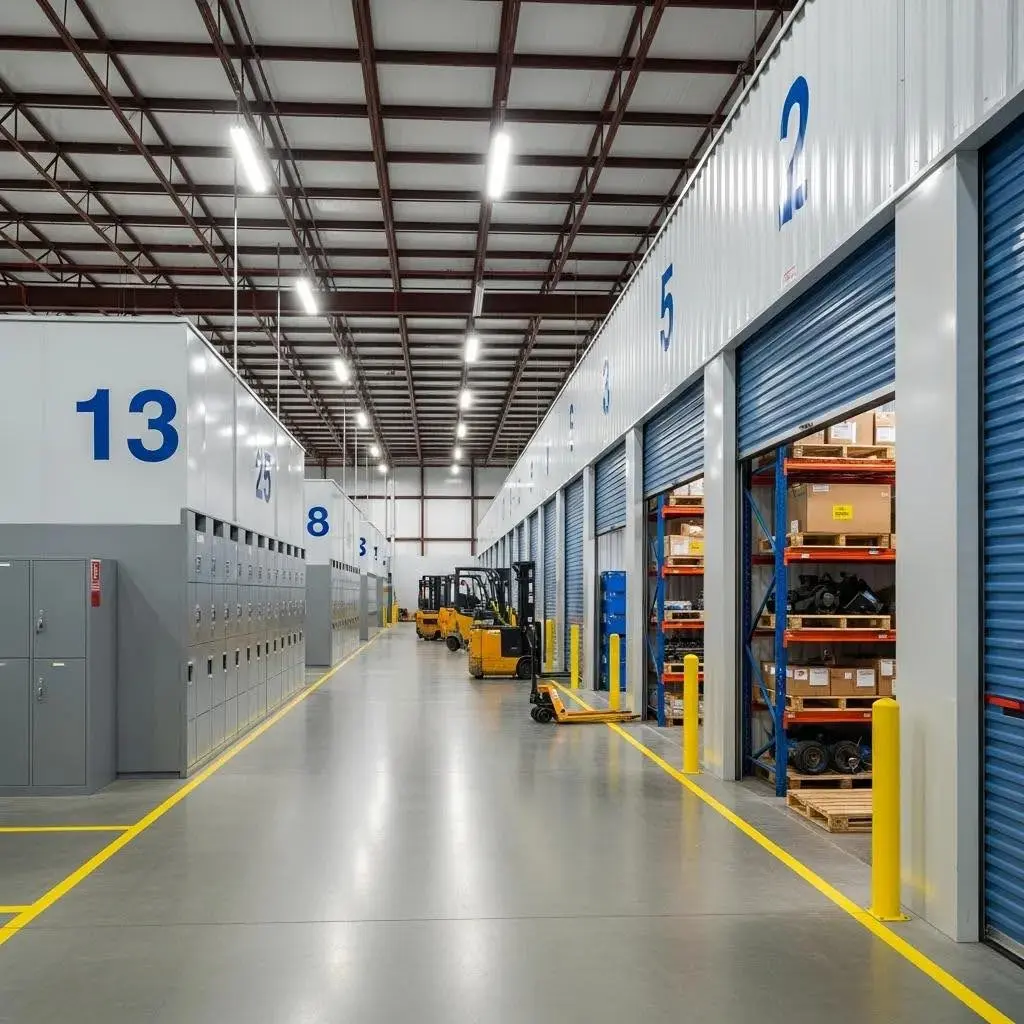
Your storage requirement is driven by a few measurable decisions that affect both floor area and usable cubic capacity. Identify the type of inventory, the physical footprint of items, and how often staff need access to decide between dense storage and easy picking.
Turnover and planned growth set the buffer you should include, and legal or safety rules (for example, minimum aisle widths) will shape your layout. Below is a concise list of the main factors and a simple rule‑of‑thumb to start sizing.
- Inventory type: defines item footprint and safe stacking limits for floor area planning.
- Access frequency: sets aisle widths, shelving style, and the space needed for picking.
- Turnover and growth: determine the contingency percentage to add for future stock.
- Storage method: shelving, pallet racking,g or containers all change vertical utilisation.
Use these factors as your sizing baseline when converting item counts into square footage.
Inventory Type and Its Influence on Storage Size
The kind of stock you store decides whether you think in pallet positions, shelving bays, or plain floor area, and it changes how much cubic space you can safely use. Archive boxes stack tightly on shelving, so document storage needs less floor area per box than bulky equipment.
Palletised goods need dedicated pallet positions and forklift access, which adds aisle and clearance space. To make this concrete: a typical pallet occupies about 13–15 sq ft of floor space but needs extra aisle clearance; a 25 sq ft unit can hold roughly 20–30 small boxes on shelving if stacked efficiently. Translating goods into these equivalents helps prevent under‑sizing.
That distinction explains why access frequency and future growth matter when you choose between density and workflow.
Business Growth and Access Frequency in Storage Planning
Factor in anticipated growth and seasonal peaks by building a buffer. A practical rule is to add 20–30% extra space for planned expansion and seasonal spikes. High‑turnover e‑commerce operations usually need more accessible floor space and wider aisles for picking and packing, while archive or long‑term storage can prioritise density with narrower access.
Access frequency also affects shelving choice: frequent picking favours open shelving and clearly labelled zones; infrequent archive storage works well with compact stacking. Look at growth forecasts and peak periods early so your chosen unit supports both current needs and your next stage of business activity.
Considering growth and access naturally points you towards the unit sizes that suit your operation.
What Are the Common Commercial Storage Unit Sizes in the UK?
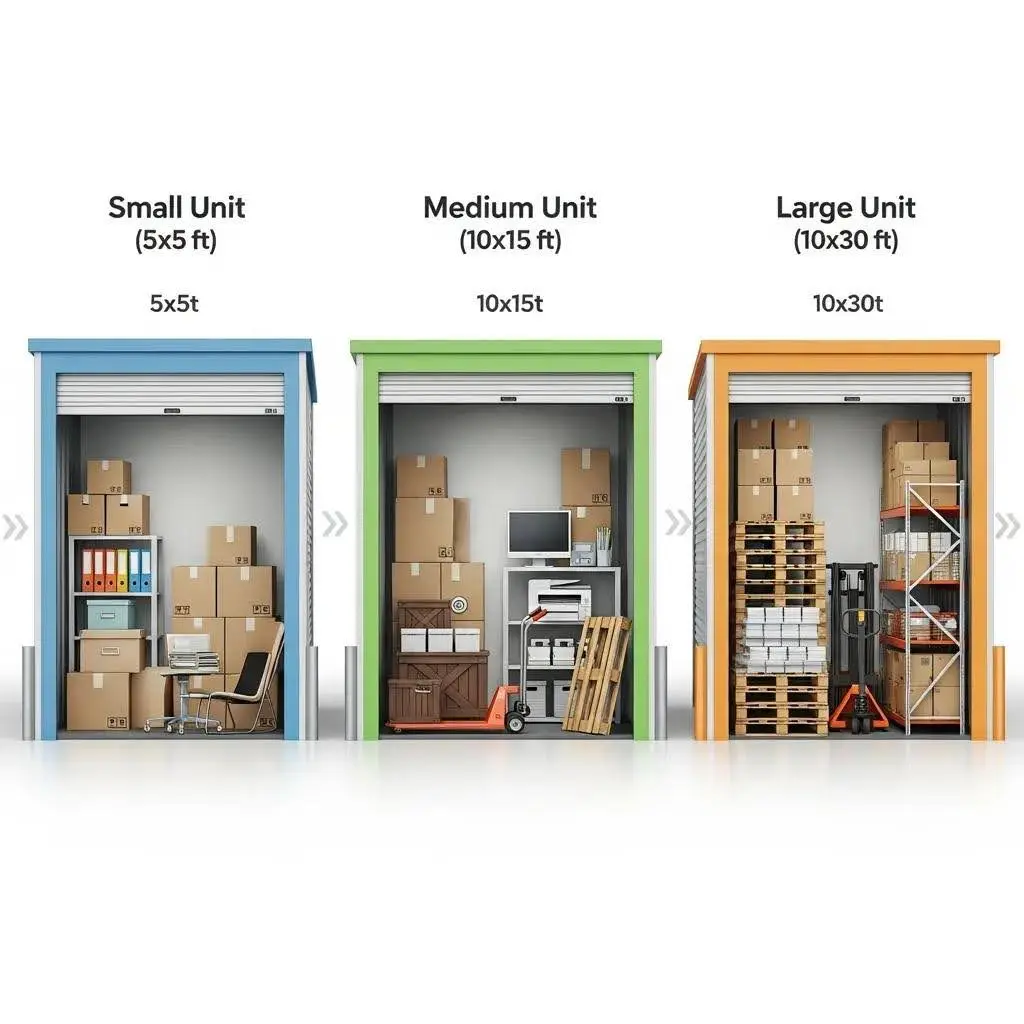
Commercial units fall into predictable size bands that map to common business uses: small, medium, and large. Small units (around 10–50 sq ft) suit document overflow and small e‑traders using shelving; medium units (50–100 sq ft) hold multiple pallets or a mix of shelving plus a small workspace; large units (100–150+ sq ft) are for palletised stock, furniture, or an internal workspace.
The table below compares typical sizes with common contents to help you shortlist suitable unit classes.
| Unit size | Typical floor area | Typical contents |
|---|---|---|
| 13–25 sq ft | Small footprint | 20–30 small boxes or 1 pallet |
| 50 sq ft | Compact business unit | Shelving for SKUs, 2–3 pallets, office boxes |
| 100 sq ft | Medium business unit | 4–6 pallets or furniture and mixed stock |
| 150+ sq ft | Large unit | Multiple pallets, workspace, bulky equipment |
This quick comparison shows how size bands match inventory types and helps you narrow down options fast.
Once you’ve shortlisted sizes, compare specific units and booking options from providers. MIGHTY Self Storage, for example, lists rooms from around 13 sq ft up to 150 sq ft, and offers online rental and payment to simplify booking. They also provide container storage and packing materials, which can make choosing the right unit easier.
Storage Units That Suit Small to Medium Businesses
Small retailers, e‑traders, and office businesses often get the best value from a compact unit with adjustable shelving, shelving multiplies usable space and keeps picking organised.
An e‑trader with a medium SKU range can fit several hundred small boxes in a 50–75 sq ft unit with adjustable shelves, provided boxes are well labelled and stacked for quick picking; adding a pallet zone helps heavier stock.
Don’t forget packing and dispatch space: most small businesses benefit from a clear area for a packing table. Modular shelving gives flexibility if your SKU mix or volume changes.
Those shelving and layout choices point to when you’ll need a larger unit due to pallet counts or workspace needs.
Situations When a Large Storage Unit Are Necessary
You’ll need a large unit when you require regular pallet access, workspace inside the unit, or storage for bulky items that can’t be stacked safely. Common triggers include holding more than four pallet positions, storing seasonal furniture or caravans, or running on‑site packing and assembly.
A simple rule: if each pallet uses about 13–15 sq ft plus roughly 50% extra for aisles, five pallets suggest around 100–120 sq ft before adding workspace. Choose a larger unit when frequent handling, returns processing, or assembly tasks need dedicated internal working space.
Spotting these triggers makes it easier to calculate space precisely using item equivalents and stacking rules.
How Can You Calculate the Ideal Business Storage Space?
Work through a clear, step-by-step method: quantify items, convert to floor area with item equivalents, apply vertical utilisation for shelving, and add buffers for access and growth.
Start by listing pallets, boxes, and shelving bays, convert each to approximate square footage with conservative stacking factors, then total the floor area. Finally, add 20–30% contingency for growth or seasonal peaks to avoid repeat moves. Follow the numbered steps below to reach a recommended square-foot plan.
Follow these steps to convert your inventory into a clear square‑foot target.
- Inventory audit: Count pallets, boxes, and shelving bays you need to store.
- Convert to floor area: Apply equivalents (pallet ≈ 13–15 sq ft; shelving bay footprints vary).
- Apply vertical factor: Multiply floor area by a stacking factor for shelving (e.g., 2–3× for tall shelving).
- Add buffer: Increase the total by 20–30% for growth, seasonal peaks, and aisle space.
Business Storage Space Calculators and How They Work
A storage space calculator takes item counts and stacking preferences and returns a recommended unit size in square feet, often with suggested layouts. Typical inputs are the number of pallets, boxes per SKU, shelving height, and access frequency.
The tool applies item equivalents and vertical utilisation factors to estimate floor area and then recommends a suitable unit band. Many calculators give a range (for example, 50–75 sq ft) to reflect different layout options. Using an estimator helps validate manual calculations and reduces the risk of picking a unit that’s too small or larger than you need.
After a manual estimate, try a provider’s online estimator to refine your choice; many sites embed these tools in the booking flow.
Using Item Equivalents and Vertical Space for Accurate Measurement
Item equivalents translate varied inventory into consistent floor‑area units: common conversions are pallets (~13–15 sq ft), a standard shelving bay footprint (~3–6 sq ft depending on depth), and small boxes (for example, 20–30 per shelf level). Calculate cubic capacity by multiplying floor area by usable height, then compare that to the average item cubic volume to check stacking feasibility.
Always account for safe stacking limits and aisle clearance: taller shelving raises cubic utilisation but needs proper racking and safe access. These conversions let you trade floor area for vertical stacking and decide whether shelving or pallet racking is right for your operation.
What Are Effective Strategies to Optimise Your Commercial Storage Space?
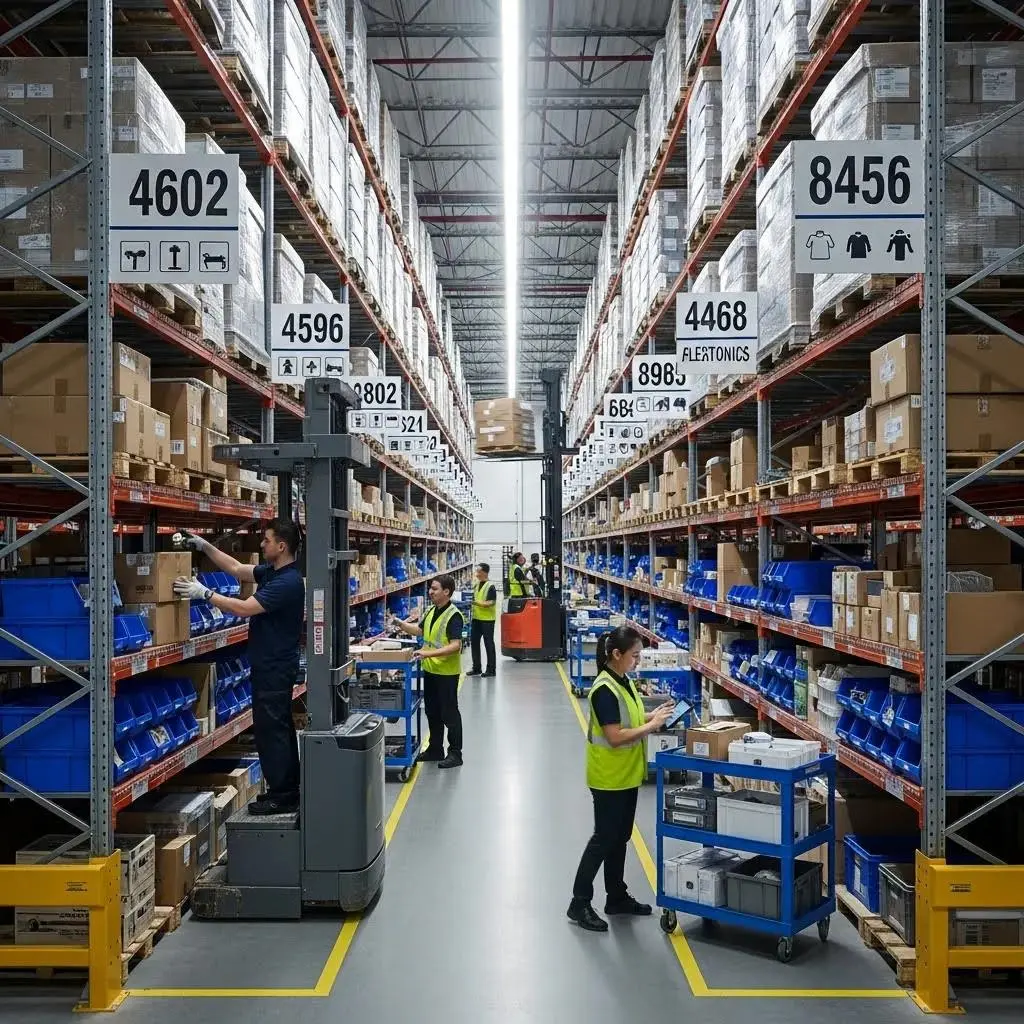
Optimising commercial storage combines using vertical space well, organising inventory for fast picking, and choosing the right packing and palletisation for safety and access. Start with shelving or pallet racking matched to item dimensions and turnover, then zone and label stock to speed picking and reduce mistakes.
Adjustable shelving and standardised boxes create predictable stacking that increases usable capacity; palletising heavy items protects stock and simplifies movement. Below are practical optimisation techniques you can apply straightaway.
These steps cut wasted floor area and reduce handling time during picking and restocking.
- Maximise vertical space with adjustable shelving or pallet racking tailored to item heights.
- Zone inventory (fast, medium, slow movers) to shorten picker travel time.
- Standardise packing and pallet sizes to improve stacking, handling, and storage density.
Maximising Vertical Space and Organising Inventory Efficiently
Shelving and racking choices dictate how much cubic capacity you can use safely. Adjustable shelving suits small SKUs; pallet racking is needed for heavy palletised stock. Set safe stacking limits, leave clear aisle widths for handling equipment, and place fast‑moving SKUs at waist height for ergonomic picking.
Quick checklist: confirm rated weight per shelf, consider 2–3 metre shelving heights where safe, and design one or two main aisles for access. These layout steps boost usable capacity without compromising safety or speed.
Layout and racking decisions link directly to packing standards and access planning that follow.
Packing and Accessibility Tips That Benefit Business Storage
Efficient packing and access planning start with uniform boxes, clear labelling, and heavier items at the base of stacks. This improves stacking stability and picking speed. Use pallets for heavy loads and shrink-wrap grouped SKUs to prevent shifting; keep a compact unpacking/packing area if you’re preparing orders on site.
Check providers’ access schedules, facilities offering seven-day access or flexible visit windows let high-turnover businesses operate without bottlenecks. Good packing and access policies reduce damage, speed fulfilment, and let you use denser storage configurations safely.
Provider services such as on‑site container storage and packing materials can speed implementation and reduce upfront purchases.
| Optimisation option | Characteristic | Practical impact |
|---|---|---|
| Adjustable shelving | Increases vertical use | Higher capacity for small SKUs |
| Pallet racking | Supports heavy loads | Safer pallet storage and forklift use |
| Containers | Secure, modular space | Good for bulky or long‑term stock |
This comparison shows how different options trade off cost, vertical use, and accessibility for specific business needs.
Many providers offer shelving, container storage, and packing materials on site to help you implement these optimisation steps quickly.
Business and booking note
If you’re based in Leicester and looking for commercial storage units, MIGHTY Self Storage in South Wigston offers a range of unit sizes (approximately 13–150 sq ft), container storage and packing materials, plus online rental and payment to make bookings simple.
Facility features include individually alarmed rooms, 24/7 internal CCTV, full insurance included, and seven‑day access. These services help reduce inbound risk and support your business workflows while in storage. To discuss unit options or get a quote, call 0116 3653001.
Frequently Asked Questions
What Are the Benefits of Using A Business Storage Space Calculator?
A storage space calculator speeds up choosing the right unit by converting your items, stacking, and shelving choices into a square‑foot recommendation. Enter counts of pallets and boxes, shelving heights, and access needs, and the tool applies item equivalents and vertical factors to suggest a unit size. It’s a quick way to double‑check manual estimates and avoid booking a unit that’s too small or unnecessarily large.
How Can I Ensure My Storage Space Is Safe And Compliant With Regulations?
Follow local rules on aisle widths, weight limits, and stacking heights, and inspect shelving and racking regularly for wear. Train staff in safe handling, use clear safety signage, and keep access routes to emergency exits unobstructed. If in doubt, consult a storage specialist to align your setup with legal requirements and industry best practice.
What Types Of Packing Materials Should I Use For Efficient Storage?
Use standardised boxes to maximise space and simplify stacking. Protect fragile items with bubble wrap or packing fill, and use shrink wrap to secure grouped SKUs on pallets. Clearly label every box for fast retrieval. Investing in durable packing supplies protects stock and improves handling efficiency.
How Often Should I Reassess My Storage Needs?
Review your storage at least annually or whenever you have major operational changes, for example, increased inventory, seasonal shifts, or a business expansion. Also, reassess after big sales events or product launches to check whether your current setup still meets demand.